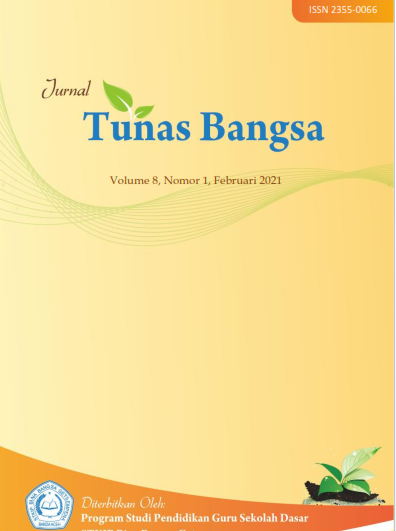
HUBUNGAN ANTARA FINANSIAL DAN MOTIVASI MAHASISWA PGSD UNIVERSITAS SERAMBI MEKKAH DALAM MENYELESAIKAN KULIAH
DOI:
https://doi.org/10.46244/tunasbangsa.v8i1.1366Keywords:
Finance, Motivation, Completing CollegeAbstract
To complete college and then getting a suitable job is every student's dream. However, to complete a course that takes 4-5 years is not easy, especially for students who have very limited finances, they have to work to meet their daily needs. Also they have to go to college for their dreams. The purpose of this study was to find out whether there is a correlation between finance and the motivation of PGSD students at Serambi Mekkah University in completing college. This research is quantitative with correlation type. The sample in this study amounted to 30 people from various levels in the PGSD department of Serambi Mekkah University. The sampling technique was using purposive sampling technique. For the collection of research data using a financial questionnaire and a motivation questionnaire. Cronbach's Alpha for the financial questionnaire r = 0.884 and Cronbach's Alpha for the motivation questionnaire r = 0.907. The results showed the person correlation r = -0.093 and a significant two tailed p = 0.625. It shows there is no relationship between financial and student motivation in completing college.
Abstrak
Menyelesaikan kuliah lalu mendapatkan pekerjaan yang layak merupakan impian setiap mahasiswa. Namun untuk menyelesaikan kuliah yang memakan waktu 4-5 tahun bukanlah hal yang mudah, terutama bagi mahasiswa yang memiliki finansial yang sanga terbatas, mereka harus bekerja demi memenuhi kebutuhan sehari-hari mereka. Juga mereka harus kuliah demi impian mereka. Tujuan penelitian ini adalah untuk mencari tahu, apakah ada hubungan antara finansial dengan motivasi mahasiswa PGSD Universitas Serambi Mekkah dalam menyelesaikan kuliah. Penelitian ini adalah kuantitatif dengan jenis korelasi. Sampel pada penelitian ini berjumlah 30 orang dari berbagai tingkatan di jurusan PGSD Universitas Serambi Mekkah. Teknik pengambilan sample menggunakan teknik purposive sampling. untuk pengumpulan data penelitian menggunakan angket finansial dan angket motivasi. Cronbach`s Alpha untuk angket finansial r=0,884 dan Cronbach`s Alpha untuk angket motivasi r=0,907. Hasil penelitian menunjukkan person Correlation r = -0.093 dan significant two tailed p = 0.625. Itu menunjukkan tidak ada hubungan antara finansial dan motivasi mahasiwa dalam meyelesaikan kuliah.
Kata Kunci: Finansial, Motivasi, Menyelesaikan Kuliah.
References
Adit, A. (2019). Kisah Perjuangan Reza, Anak Sopir Lulus ITB IPK 3,98. Kompas.Com. https://edukasi.kompas.com/read/2019/12/30/15465361/kisah-perjuangan-reza-anak-sopir-lulus-itb-ipk-398?page=all
Al‐Tamimi, H. A. H. (2009). Financial literacy and investment decisions of UAE investors. The Journal of Risk Finance.
Arikunto. (2014). Prosedur Penelitian Suatu Pendekatan Praktik. Rineka Cipta.
Chen, H & Volpe, R. . (2002). Gender differences in personal financial literacy among collage students. Financial Serivices Review, 11(3), 289–307.
Dirmantoro, M. (2015). Motivasi Mahasiswa Kuliah Sambil Bekerja. Fakultas Psikologi, Universitas Maulana Malik Ibrahim Malang.
Djamarah, S. B. (2011). Psikologi Belajar. Rineka Cipta.
Donald. (2012). Belajar dan Pembelajaran:Meningkatkan Mutu Pembelajaran Sesuai Standar Nasional. Teras.
Ghullam Hamdu, L. A. (2011). Pengaruh Motivasi Belajar Siswa Terhadap Prestasi Belajar IPA di Sekolah Dasar. Jurnal Penelitian Pendidikan, 12(1), 6. https://www.academia.edu/download/35968572/8-Ghullam_Hamdu1.pdf
Huston, S, J. (2010). Measuring financial literacy. Journal of Consumer Affair, 44(2), 296–316.
Kreitner & Kinicki. (2016). Perilaku Organisasi (9th ed.). salemba Empat.
Malayu Hasibuan. (2010). Organisasai & Motivasi. PT. Bumi Aksara.
Masni, H. (2017). Strategi Meningkatkan Motivasi Belajar Mahasiswa. Jurnal Ilmiah Dikdaya, 5(1), 34–45.
Monticone, C. (2010). How much does wealth matter in the acquisition of financial literacy? Journal of Consumer Affairs, 44(2), 403–422.
Nashar. (2004). Peranan Motivasi dan Kemampuan Awal dalam Kegiatan Pembelajaran. Delia Press.
Prawira, P. A. (2014). Psikologi Pendidikan dalan Perspektif Baru. Ar-Ruzz Media.
Purwa. A. P. (2012). Psikologi Pendidikan dalam Perspektif Baru. Ar-Ruzz Media.
Putra. (2017). Desain Evaluasi Belajar Berbasis Kinerja. Pustaka Pelajar.
Putra, P. (2018). Pengaruh Motivasi Belajar, Prestasi, dan Informasi Perguruan Tinggi Negeri terhadap Minat Melanjutkan Studi ke Perguruan TInggi Negeri pada Siswa Kelas XII IPS SMA Negeri 1 Sumberejo Kabupaten Tanggamas. Universitas Lampung.
Ramsay, S. (2011). Reading Machines: Toward and Algorithmic Criticism. University of Illinois Press.
Remund, D. . L. (2010). Financial literacy explicated: The case for a clearer definition in an increasingly complex economy. Journal of Consumer Affairs, 44(2), 276–295.
RISTEKDIKTI. (2018). Statistik Pendidikan Tinggi 2018.
Sardiman .A.M. (2007). Interaksi dan Motivasi Belajar Mengajar. PT. Rajagrafindo Persada.
Sardiman, A. M. (2000). Interaksi & Motivasi Belajar. PT. Raja Grafindo Persada.
Shadily, J. E. dan H. (2003). Kamus Bahasa Inggris. Gramedia Pustaka.
Suramaya, A. &. (2015). Motivasi Belajar pada Mahasiswa. Jurnal Pendidikan Akuntasni Indonesia, XIII(2), 1–2.
Downloads
Published
How to Cite
Issue
Section
License
Authors who publish with this journal agree to the following terms:
- Authors retain copyright and grant the journal right of first publication with the work simultaneously licensed under a Creative Commons Attribution License that allows others to share the work with an acknowledgment of the work's authorship and initial publication in this journal.
- Authors are able to enter into separate, additional contractual arrangements for the non-exclusive distribution of the journal's published version of the work (e.g., post it to an institutional repository or publish it in a book), with an acknowledgment of its initial publication in this journal.
- Authors are permitted and encouraged to post their work online (e.g., in institutional repositories or on their website) prior to and during the submission process, as it can lead to productive exchanges, as well as earlier and greater citation of published work (See The Effect of Open Access).








12.jpg)